
Burned-Out Executives Are Booking Retreats for Their Nervous Systems
A new Forbes article by Jasmine Browley put numbers to a trend that anyone running a retreat venue has been watching build for several years. The new luxury isn't another packed itinerary or bucket-list destination. It's the radical act of intentionally doing less in an environment designed to make slowing down feel not just acceptable, but necessary.
The hospitality industry, the article notes, understood this before most employers did. And the data tells a clear story about why.
The Burnout Numbers Are Hard to Ignore
The Forbes piece draws on research showing the scale of what's happening across the professional workforce. These aren't edge-case statistics — they describe the mainstream experience of working life in 2026.
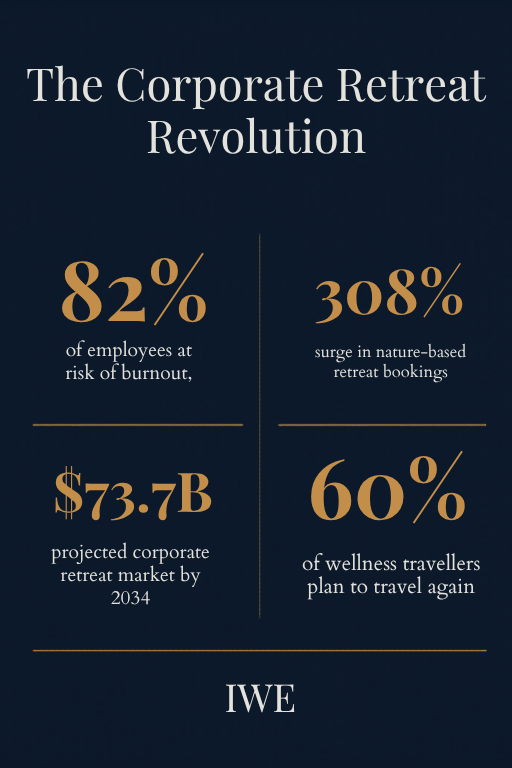
82% of employees currently at risk of burnout
308% surge in nature-based retreat bookings, 2023–2024
$73.7B projected corporate retreat market value by 2034
60% of wellness travelers plan to travel for wellness again
Behind the numbers is a straightforward reality: professionals are overstimulated, perpetually available, and arriving at their breaks already depleted — essentially entering recovery mode the moment they check in. The term "nervous system regulation," once confined to therapists and somatic practitioners, has entered the mainstream corporate conversation because it describes something real.
What Exhausted Teams Actually Need
The Forbes article makes a sharp distinction that most corporate wellness programmes miss. What burned-out professionals need isn't another app subscription, wellness stipend, or "wellness day" bolted onto an unsustainable pace. They need a fundamental change in environment, expectations, and tempo.
"Recovery is not a perk. It is infrastructure."
Heike Pacchetti, General Manager, Farmhouse Inn — via Forbes
This is the distinction between a corporate retreat that actually works and one that doesn't. It's not about the quality of the canapés or whether the hotel has a gym. It's about whether the environment itself creates the conditions for recovery — before the first session, before the first agenda item, before anyone opens their notebook.
Why an Island Changes Everything
The Forbes piece highlights countryside and nature-based settings as the fastest-growing category in corporate travel — a 308% increase in a single year. The reason isn't aesthetic. It's psychological.
When you change environment dramatically enough, the nervous system registers it. The water taxi crossing from Sandspit to Kawau Island isn't just logistics — it's the moment most guests visibly decompress. The city noise, the open-plan office, the notification cycle — all of it stays on the mainland. What arrives on the island is something most corporate teams haven't experienced in months: genuine quiet, a different pace, and the permission to stop performing.
This is what we see every time a group steps off the wharf at Island Weddings & Events. The shoulders drop. The phones go face-down. Something releases that couldn't have been planned or facilitated — it simply happens when the environment is right.
The Corporate Retreat, Reimagined
The best corporate retreats in 2026 don't look like the ones from five years ago. The packed agenda, the ballroom, the forced team-building — these are being replaced by smaller, more intentional gatherings that balance productive working sessions with real restoration.
That balance is built into how we design retreat experiences at IWE. Morning strategy sessions when cognitive energy is highest. Genuine free time in the afternoon — bush walks, kayaking, time on the water. Shared dinners that run long because nobody wants to stop talking. An early night in a room where the only sound is the harbour.
The research supports what experience already shows: teams that share non-work experiences in natural environments return to work with measurably higher trust, clearer thinking, and better decision-making. The retreat isn't the reward for good performance. It's part of what makes good performance possible.